

Co-Ferment vs Traditional Coffee Processing: What’s the Difference?
Co-Ferment vs Traditional Coffee Processing: What’s the Difference?
When you look at a coffee bag, words such as washed, natural, honey, anaerobic and co-ferment can make the processing side of coffee seem much more complicated than it really is.
But these terms are actually telling you something important: what happened to the coffee after it was harvested and before it was roasted.
And that stage can have a noticeable influence on the character of the final cup. Research examining different coffee-processing methods has found differences in the volatile and bioactive compounds of coffees processed in different ways, including washed, natural and fermented methods.
Among the newer and more experimental approaches, co-ferment coffee has attracted particular interest.
So, what exactly is co-fermentation?
How is it different from more traditional coffee processing?
And does co-ferment automatically mean a more flavourful coffee?
The short answer is: not necessarily better — just different.
Let's break it down.
First, What Happens to Coffee After Harvest?
Before coffee becomes the roasted beans we know, it starts as a fruit.
Inside each coffee cherry are the seeds that eventually become what we call coffee beans.
Once the cherries are harvested, producers need to process them. This stage determines how the fruit is removed, how fermentation takes place and how the coffee is dried before it becomes stable green coffee ready for roasting.
This is where processing methods come into play.
A washed coffee generally has the fruit removed relatively early, with fermentation used to break down remaining mucilage before the coffee is washed and dried.
A natural coffee is dried with the fruit still around the seed, allowing much longer contact between the coffee and the cherry during drying.
A co-ferment takes the idea of fermentation in a different direction by introducing another ingredient into a controlled fermentation process.
That additional element is one of the things that makes co-fermented coffee so interesting.
What Is Co-Ferment Coffee?
A co-ferment coffee is a coffee that undergoes fermentation alongside another ingredient or flavour source.
The exact technique can vary considerably from one producer to another.
That is important because "co-ferment" isn't a single standardized recipe.
Different producers may use different ingredients, fermentation environments, microorganisms, durations and processing techniques.
The objective can be to create a particular sensory direction while still allowing the underlying coffee to remain part of the final experience.
This is one reason co-fermentation is generally considered part of the broader world of experimental coffee processing.
It gives producers another variable to work with..
Instead of only deciding how much of the coffee cherry remains around the bean during drying, they can experiment with the fermentation environment itself.
How Is Traditional Washed Processing Different?
Washed processing is one of the more familiar coffee-processing methods.
After harvesting, the coffee cherries are typically depulped to remove the outer fruit. The beans then undergo fermentation to break down remaining mucilage before being washed and dried.
The process can involve careful control over fermentation time and drying conditions.
The resulting coffees are often associated with clarity, defined acidity and a cleaner flavour profile, although the exact result depends on the coffee itself and how it was processed.
One reason washed coffee remains popular is that it can allow the characteristics of the coffee's origin and variety to come through clearly.
But "washed" doesn't mean bland.
A well-produced washed coffee can be incredibly complex.
What About Natural Processing?
Natural processing takes a different approach.
Instead of removing the fruit shortly after harvest, the coffee cherries are dried with the fruit still intact.
As the cherries dry, the coffee remains in contact with the fruit and its surrounding materials for an extended period.
This can contribute to coffees with more pronounced sweetness, fruit characteristics and fuller body.
Naturals and washed coffees therefore often create very different drinking experiences.
But neither method should automatically be considered superior.
It is more useful to think of them as different ways of expressing coffee.
So Where Does Co-Fermentation Fit In?
This is where things get particularly interesting.
Co-fermentation doesn't necessarily replace the traditional idea of washed or natural processing.
In fact, a coffee can still have a conventional processing component while incorporating a co-fermentation stage.
Bili Hu's Wild Fig Co-Ferment, for example, is described as "Wild Fig Co-Ferment, Washed Arabica." It uses Chandragiri Arabica beans from Kalledevarapura Estate in Bababudangiri, Chikmagalur, and is roasted to a medium level.
That combination itself is worth noticing.
It shows that coffee-processing terminology isn't always about putting coffees into completely separate boxes.
A coffee can have a washed foundation while also using a more experimental fermentation approach.
Co-Ferment vs Traditional Processing: A Simple Comparison
|
Aspect |
Traditional Washed Processing |
Natural Processing |
Co-Ferment Processing |
|
Fruit handling |
Fruit removed relatively early |
Fruit remains during drying |
Depends on the specific method |
|
Fermentation |
Controlled fermentation often used |
Fermentation develops during drying |
Fermentation is intentionally influenced by an additional ingredient/process |
|
Main focus |
Clarity and clean expression |
Fruit, sweetness and body |
Developing a distinctive flavour direction |
|
Flavour potential |
Clean, bright, defined |
Fruity, sweet, fuller |
Often more unusual or expressive |
|
Process complexity |
Established and widely used |
Established and widely used |
More experimental |
|
Consistency |
Generally familiar and established |
Depends heavily on drying conditions |
Requires careful control |
|
Coffee experience |
Origin-focused |
Fruit-forward possibilities |
Experimental and process-driven |
This doesn't mean every washed coffee will taste clean or every co-ferment will taste fruity.
Coffee is too complex for fixed rules.
The variety, altitude, climate, harvesting, fermentation, drying, roasting and brewing method all contribute to what eventually ends up in your cup.
Why Does Fermentation Matter So Much?
Fermentation is not unique to coffee.
It plays an important role in many foods and beverages.
In coffee processing, microorganisms interact with the sugars and other compounds present around the coffee seed. The conditions under which this happens — including time, temperature and environment — can influence the resulting coffee.
Research has found that different processing approaches can affect the chemical and volatile composition of specialty coffee.
This is one reason controlled fermentation has become such an interesting area of specialty coffee.
Instead of treating fermentation as something that simply happens during processing, producers can approach it more deliberately.
Why Add Another Ingredient to Fermentation?
This is the question behind co-fermentation.
An additional ingredient can influence the fermentation environment and contribute to a particular sensory direction.
But it's important not to think of this as simply "adding flavour to coffee."
The actual process is more nuanced.
The final cup is still influenced by the original coffee, its variety, origin, processing conditions, roasting and brewing.
The additional ingredient becomes one part of a larger process.
That's why two co-fermented coffees can taste completely different.
One might lean toward tropical fruit.
Another might be more floral.
Another could develop dried-fruit, spice or wine-like characteristics.
There isn't one universal "co-ferment flavour."
Bili Hu's Wild Fig Co-Ferment: A Real Example
A good way to understand co-fermentation is to look at an actual coffee rather than just discussing the concept.
Bili Hu's Wild Fig Co-Ferment comes from Kalledevarapura Estate, Bababudangiri, Chikmagalur.
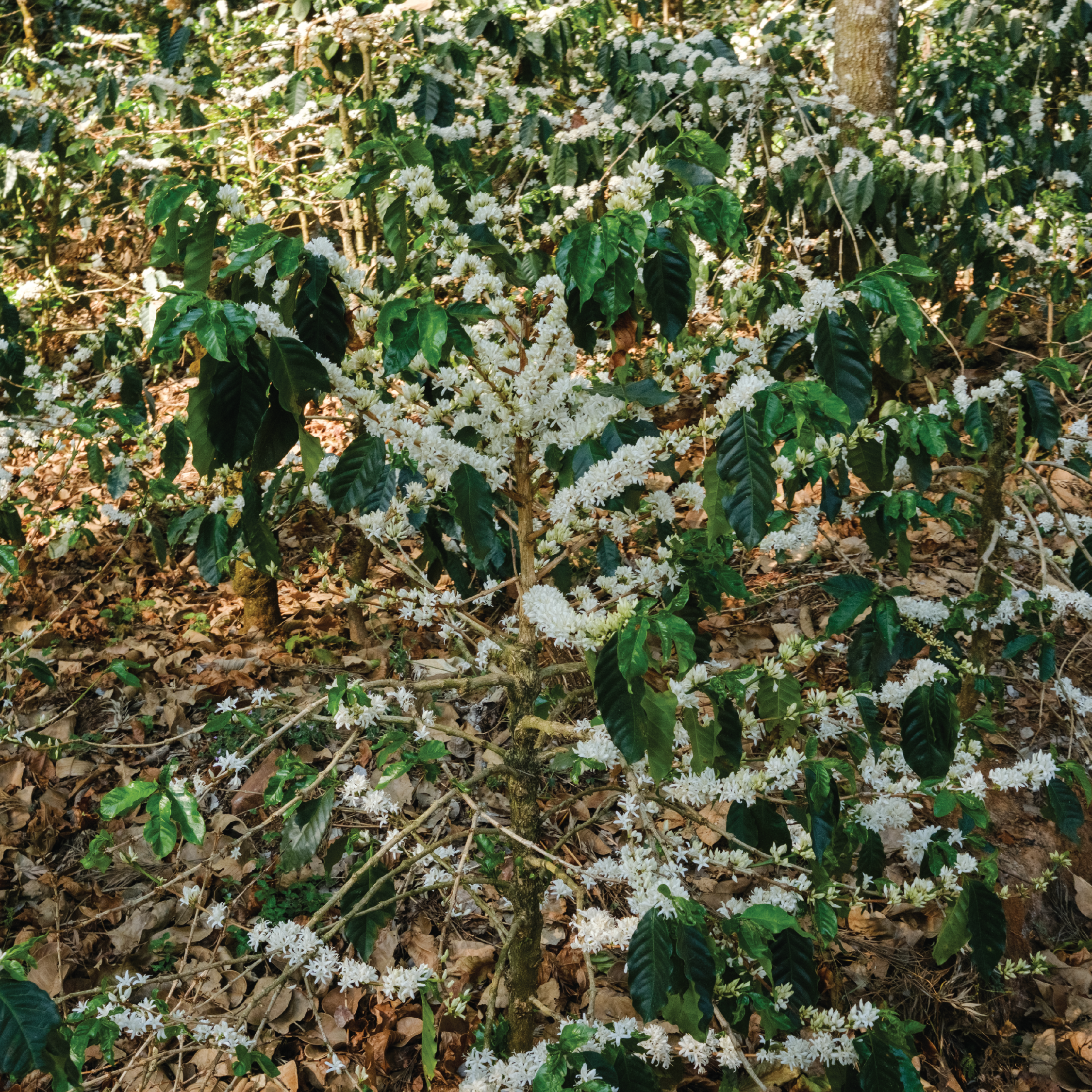
It uses Chandragiri Arabica beans, a medium roast and a processing method described by Bili Hu as Wild Fig Co-Ferment, Washed Arabica.
The story behind the coffee is particularly interesting.
Bili Hu describes discovering wild figs naturally present around the estate and developing the coffee around that observation. The coffee is grown under the shade of fig trees, and the wild figs became part of the fermentation concept.
The resulting coffee is described with a profile built around rum and raisins, brown sugar and dried berries, with medium acidity and full body when tasted as whole beans.
That makes it a useful example of how a co-ferment can be used to create a coffee experience that feels noticeably different from a conventional washed or natural profile.
The Interesting Part: The Flavour Changes With Brewing
There's another reason the Wild Fig Co-Ferment is worth discussing.
The coffee doesn't present exactly the same way through every brewing method.
Bili Hu lists different tasting impressions depending on preparation:
-
Whole beans: Rum & raisins, brown sugar and dried berries
-
French Press: Caramelized honey, winey and apricot
-
Pour Over: Rose, raspberry and lime
-
Moka Pot / Percolator: Winey, dried berries and roasted nuts
-
Espresso: Roasted almonds, peach and apricot
-
AeroPress: Nutmeg and black grapes
That's a good reminder that processing is only one part of the coffee experience.
You can start with an interesting processing method, but the final cup also depends on how the coffee is roasted and brewed.
Is Co-Ferment Coffee Artificially Flavoured?
This is a common question.
Co-fermentation and flavouring are not necessarily the same thing.
In a co-fermentation process, the additional ingredient is involved during fermentation rather than simply being sprayed or added to the finished roasted beans.
However, because co-fermentation techniques vary, it is always better to look at the specific coffee and producer's processing description rather than making assumptions from the term alone.
With Bili Hu's Wild Fig Co-Ferment, the product description specifically identifies the post-harvest process as Wild Fig Co-Ferment, Washed Arabica.
Does Co-Ferment Coffee Taste Stronger?
"Stronger" isn't really the best word.
A coffee can have an intense flavour without necessarily having more caffeine or being more heavily roasted.
Co-fermented coffees can sometimes have very noticeable flavour characteristics because the processing is designed to create a distinctive sensory profile.
But intensity depends on several factors.
The coffee variety matters.
The roast matters.
The brewing method matters.
And of course, the fermentation process matters.
So it's better to ask:
Is this coffee more expressive or more distinctive?
rather than simply asking whether it is stronger.
Is Co-Ferment Better Than Washed Coffee?
No.
And this is probably the most important point.
There is no universal winner.
Washed coffee can be excellent.
Natural coffee can be excellent.
Co-fermented coffee can be excellent.
They simply offer different experiences.
Washed processing can appeal to someone who enjoys clarity and a more defined cup.
Natural coffee can be attractive to someone who loves sweetness and fruit.
Co-ferment can be exciting for someone who enjoys unusual, layered or experimental flavour profiles.
Your preference is what matters.
Who Should Try Co-Ferment Coffee?
Co-ferment is worth exploring if you:
-
Enjoy trying unusual coffees
-
Like fruit-forward or complex flavour profiles
-
Want to understand experimental processing
-
Already enjoy specialty coffee
-
Like comparing different processing methods
-
Enjoy experimenting with brewing
-
Want to move beyond conventional coffee profiles
It can also be a fun way for experienced coffee drinkers to challenge their palate.
You don't necessarily have to know everything about coffee before trying one.
In fact, curiosity is probably the best starting point.
How Should You Brew a Co-Ferment Coffee?
There isn't one perfect answer.
The brewing method should depend on the particular coffee and what you want from it.
For a coffee such as Bili Hu's Wild Fig Co-Ferment, you could experiment with several methods because the product information provides tasting notes for multiple preparations.
Pour Over
If you want to explore the more delicate side of the coffee, pour-over can be a good place to start.
The Wild Fig Co-Ferment is described with rose, raspberry and lime notes when brewed this way.
French Press
If you prefer more body, French press may be more appealing.
Bili Hu lists caramelized honey, winey and apricot characteristics for this preparation.
Espresso
Espresso takes the coffee in another direction.
For this particular coffee, Bili Hu notes roasted almonds, peach and apricot.
This is why experimenting with one coffee across different brewing methods can be more interesting than immediately buying several different coffees.
What Should You Look for When Buying Co-Ferment Coffee?
If you're interested in trying co-ferment coffee, don't choose one only because the label sounds unusual.
Look for information about:
Origin
Where was the coffee grown?
Variety
Which coffee variety was used?
Processing
What exactly does the producer mean by co-ferment?
Roast
How has the coffee been roasted?
Tasting notes
Do the flavour characteristics sound appealing to you?
Brewing recommendations
Does the coffee work with your preferred brewing method?
These details give you a much better idea of what you're buying.
The Future of Experimental Coffee Processing
Coffee processing has always evolved.
Producers have continually experimented with drying, fermentation, temperature, time and different approaches to handling the coffee cherry.
Co-fermentation is part of that wider movement.
It reflects a growing interest in treating coffee processing as a deliberate craft rather than simply a necessary step between harvesting and roasting.
At the same time, traditional methods aren't disappearing.
Washed and natural coffees remain important because they can produce exceptional results when handled well. Industry discussions around processing increasingly emphasize that different methods have different strengths rather than treating one as universally superior.
That's probably the healthiest way to look at coffee innovation.
Experimentation should add possibilities, not replace everything that came before it.
Final Thoughts
The difference between co-ferment and traditional coffee processing ultimately comes down to how the coffee is handled after harvest and how fermentation is incorporated into that journey.
Washed processing generally focuses on removing the fruit and controlling fermentation before washing and drying.
Natural processing keeps the coffee cherry intact during drying.
Co-fermentation takes fermentation in a more experimental direction by introducing another element into the process.
None of these approaches automatically produces better coffee.
They simply create different opportunities for flavour.
Bili Hu's Wild Fig Co-Ferment is a particularly interesting example because it combines a washed Arabica foundation with a wild-fig co-fermentation approach, resulting in a coffee with a distinctive flavour profile and different expressions across brewing methods.
Try Wild Fig Co-Ferment by Bili Hu
And perhaps that's the best way to understand co-fermented coffee:
It's not about making traditional coffee processing obsolete. It's about giving coffee producers another way to explore what a coffee can become.
Frequently Asked Questions
What is co-ferment coffee?
Co-ferment coffee is coffee that undergoes a controlled fermentation process involving an additional ingredient or flavour source. The exact technique can vary depending on the producer and coffee.
How is co-ferment coffee different from washed coffee?
Washed processing generally involves removing the coffee fruit relatively early, fermenting the remaining mucilage and then washing and drying the beans. Co-fermentation introduces an additional element into the fermentation process to develop a different sensory direction.
Is co-fermented coffee artificially flavoured?
Not necessarily. Co-fermentation and post-roast flavouring are different processes. Co-fermentation takes place during coffee processing, while flavouring can involve adding substances to roasted coffee afterward. Always check the producer's specific processing description.
Does co-fermentation change the flavour of coffee?
It can. Processing methods influence the chemical and volatile characteristics of coffee, and controlled fermentation can contribute to distinctive flavour profiles.
Is co-ferment coffee stronger than regular coffee?
Not necessarily. "Strength" can refer to brewing concentration, roast intensity or flavour intensity. A co-fermented coffee may have a more pronounced flavour profile without necessarily being stronger in caffeine or roast level.
Is co-ferment coffee better than natural or washed coffee?
There is no universal answer. Washed, natural and co-fermented coffees offer different flavour experiences. The best choice depends on your personal taste.
What is Bili Hu Wild Fig Co-Ferment?
Bili Hu Wild Fig Co-Ferment is a medium-roast Chandragiri Arabica from Kalledevarapura Estate, Bababudangiri, Chikmagalur. Its listed post-harvest process is Wild Fig Co-Ferment, Washed Arabica.
What does Bili Hu Wild Fig Co-Ferment taste like?
As whole beans, Bili Hu describes it with rum and raisins, brown sugar and dried berries, along with medium acidity and full body. The flavour profile changes depending on the brewing method.
Which brewing methods can I use for Wild Fig Co-Ferment?
Bili Hu provides brewing-specific notes for French Press, Pour Over, Moka Pot/Percolator, Espresso and AeroPress, in addition to its whole-bean profile.
Where does Bili Hu Wild Fig Co-Ferment come from?
The coffee comes from Kalledevarapura Estate in Bababudangiri, Chikmagalur, and uses Chandragiri Arabica beans.
Why is Wild Fig used in this coffee?
Bili Hu's product story explains that wild figs were naturally found around the estate and became the inspiration for the co-fermentation process. The coffee is grown under the shade of fig trees.
Is co-ferment coffee suitable for beginners?
Yes. You don't need advanced coffee knowledge to try it. If you enjoy experimenting with different flavours and want to explore specialty coffee beyond conventional washed or natural profiles, co-ferment coffee can be an interesting starting point.

